New (patent pending) current shunt architecture enables non-intrusive, real-time current measurement for next-generation power systems
San Antonio, TX – APEC 2026 — Picotest, a leader in high-performance test solutions for power integrity and power electronics, today announced a new family of ultra-low insertion inductance, ultra-high-bandwidth current shunt resistors, designed to enable accurate, real-time transient voltage measurement in today’s fastest-switching power systems.
The new technology—currently under provisional patent as “Ultra-Low Insertion Inductance and Ultra-High-Bandwidth Current Shunt”—addresses one of the most critical and long-standing challenges in power electronics: how to measure current and small power rail voltage changes without disturbing the circuit being measured.
Solving the Measurement Bottleneck in Modern Power Systems
As switching speeds continue to accelerate — particularly in low voltage/ultra-high dynamic current systems — engineers are increasingly limited not by their designs, but by their ability to measure them.
Traditional differential voltage/current measurement methods introduce excessive inductance, degrade performance, and fail to capture fast transient behavior. This is especially problematic when validating power distribution networks (PDNs), VRMs, and high-speed load transients.
Picotest’s new current shunt technology directly addresses this limitation.
“In many high-speed systems, the measurement tool is the dominant source of error,” said Steve Sandler, Founder and CEO of Picotest. “Our goal was to create a differential voltage/current measurement solution that is effectively invisible to the circuit.”
Engineered as an Electromagnetic Structure, Not a Lumped Component
Unlike conventional resistors, the Picotest current shunt is designed as a distributed electromagnetic structure, optimizing internal coupling, geometry, and current paths to achieve unprecedented performance.
Key innovations include:
• Ultra-low insertion inductance (~2 pH contribution in real systems) minimizing circuit disturbance
• GHz-class bandwidth capability, enabling measurement of sub-nanosecond switching events
• Optimized internal coupling to reduce ESL without degrading resistance accuracy
• Integrated thermal and electromagnetic design, including reference plane and heat spreading structures
• Production-ready form factor suitable for PCB integration—not just lab setups
The physical implementation leverages a thin substrate with resistive films, controlled terminations, vias, and a heat-spreading structure that also influences electrical performance.
Designed for Real Systems—Not Just the Lab
Unlike traditional external shunts that are removed after validation, Picotest’s new current shunts are designed to be:
• Embedded directly into production PCBs
• Used for real-time monitoring and control
• Compatible with both hardware and software compensation techniques
• Work with high CMRR probes such as the Tektronix TICP IsoVu™ Isolated Current Probes
This enables new capabilities such as:
• Real-time current visibility in deployed systems
• Phase current balancing and sharing
• Efficiency optimization and degradation monitoring
• High-fidelity double-pulse and switching loss analysis
Enabling the Next Generation of Load Step and PDN Measurements
The new current shunt technology is a natural extension of Picotest’s high-speed load stepper portfolio, including the industry-leading S2000 2000 A/ns transient load stepper.
In these systems, measurement fidelity is critical:
• Load steps are applied to ultra-low voltage rails
• Voltage response is captured using high-bandwidth probes (e.g., P2104A, P2105A)
• Current is traditionally difficult to measure without introducing error
With the new shunt technology:
Engineers can now directly measure current at critical nodes—such as VRM power rail disturbances or MOSFET drains—without significantly altering system behavior.
This is particularly important in sensitive locations where even small parasitic inductance can distort results. In validation testing, the Picotest shunt contributes less than 10% of total parasitic inductance in critical nodes, enabling highly accurate characterization.
Compatible with Industry Measurement Ecosystems
The shunts are designed for seamless integration with:
• High-bandwidth oscilloscopes
• Differential and isolated probes (e.g., Tektronix IsoVu™ systems)
• Software-based compensation workflows
This allows engineers to correct for the full measurement chain—including probe and oscilloscope effects—while preserving the physical integrity of the circuit.
From Research to Production
Following extensive research and validation, Picotest is transitioning the technology into production in collaboration with Thin Film Technology.
• Initial devices and evaluation boards will be available soon
• Early access and demonstrations are available at APEC 2026
• Distribution expected through major channels including DigiKey
See It Live at APEC 2026
Attendees at APEC in San Antonio are invited to visit the Picotest booth # 505 and the Thin Film Technology Corp. Booth #343 to see:
• Live demonstrations of ultra-high-speed load stepping
• Real-time current measurement using the new shunt technology
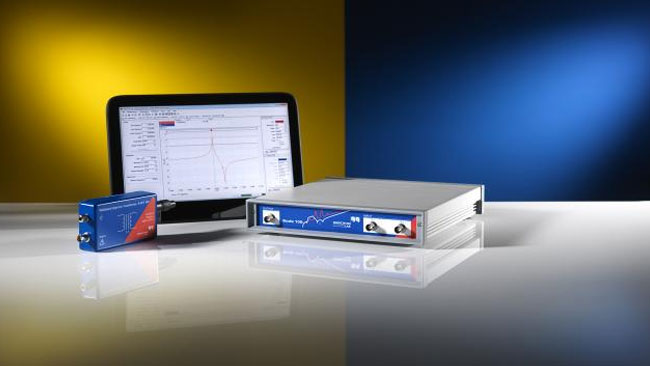
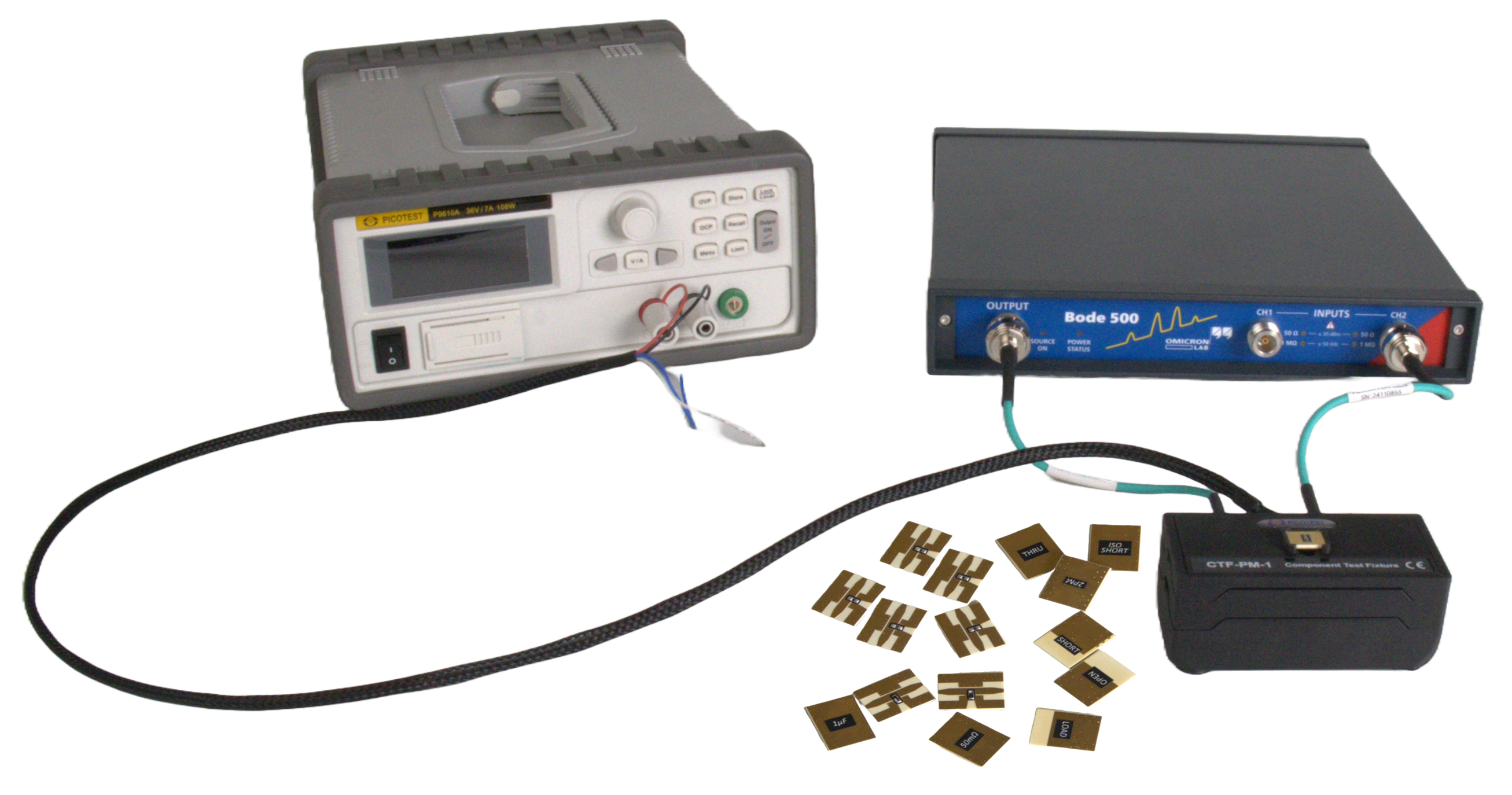
• Integration with the Bode 100/500 and advanced power integrity workflows
About Picotest
Picotest provides high-performance test solutions for power integrity, power electronics, and high-speed measurement. Its products—including probes, injectors, load steppers, and modeling tools—enable engineers to design, validate, and optimize next-generation electronic systems.